What Are the 7 Best Film Cutting Machines for Buyers?

Choosing the right Film Cutting Machine starts with the material, not the sales brochure. Thin packaging film, protective window film, and adhesive-backed rolls can behave very differently under a blade. A machine that cuts cleanly through one may stretch, snag, or leave rough edges on another. Small details matter: roll width, cutting pressure, blade life, feed accuracy, and how quickly an operator can change a job.

This guide compares seven machines buyers may encounter, from compact systems for short runs to production models built for steady workloads. It considers practical factors such as setup time, cut consistency, software, maintenance access, and the space each machine needs. A fast specification sheet is useful. A test cut on your own film is better. Even then, sample results may not predict months of daily use.

A named expert quotation should sharpen a buying guide, not decorate it. No source articles or verified expert statement were provided for this request, so I won’t invent an expert’s name or words. That is a limitation worth acknowledging. The comparisons that follow should be checked against current manufacturer specifications and real material trials before purchase. One more thing: the “best” machine may be the one that causes fewer interruptions, even if it is not the fastest on paper.
What Are the 7 Best Film Cutting Machines for Buyers?

What Film Cutting Machines Do and How They Work

Film cutting machines turn continuous rolls of plastic film into measured sheets, strips, or shaped blanks for converting and packaging. An operator loads the roll onto an unwind stand, threads the web through guide rollers, and sets the cut dimensions. Feed rollers advance the film under controlled tension. Photoelectric sensors can detect printed registration marks and help align each cut. A rotary blade, guillotine knife, or slitting tool then makes the cut. Some machines cut while the film moves; others pause the web for each stroke. Tension matters.

Grand View Research’s Packaging Machinery Market report estimated the global market at USD 46.1 billion in 2022 and projected 5.3% annual growth from 2023 to 2030. This figure covers packaging machinery broadly, not film cutters alone, so it is useful context rather than a direct measure of cutter demand. For buyers, the material decides. Film thickness, stretch, and surface friction can affect tracking and edge quality. During a machine trial, run the intended film and check cut length, registration, waste, and roll alignment—not only rated speed. Faster feeding can amplify tracking errors, and a setting that works on one film may need adjustment on another.


The Main Types of Film Cutting Machines

Film cutting machines differ in how they hold and move material. Flatbed cutters keep a sheet steady on a vacuum table while a blade follows digital patterns. They suit prototypes, labels, and short production runs, especially when shapes change often. Check the usable table area and vacuum strength; thin film can shift if suction is uneven. A small test cut helps reveal this.

Roll-fed cutters pull film from a roll and cut it continuously, making them practical for longer runs and repeated designs. Rotary systems use a rotating die or blade, often producing fast, consistent cuts once tooling is set. That speed has a trade-off: changing a design may require new tooling. Laser cutters handle intricate shapes without blade pressure, but heat can melt or discolor some films. Material testing matters. Always.

Some buyers also consider manual or benchtop cutters for simple, low-volume work. They cost less and need little setup, yet accuracy depends heavily on the operator. Not every film behaves the same. Stretch, adhesive backing, thickness, and liner construction all affect cut quality. Compare sample results, edge finish, waste, and setup time—not just advertised speed. A machine that looks efficient on paper may struggle with curled film on a busy shop floor.

Key Features Buyers Should Compare

What Are the 7 Best Film Cutting Machines for Buyers?

Key Features Buyers Should Compare

A machine’s advertised speed tells only part of the story. Compare usable cutting width, material thickness, blade options, and accuracy on the film you actually process. Ask for a test cut using your own roll, including a small curve and a tight corner. Check whether the feed stays straight across a full-width sheet. A clean sample matters more than a polished brochure.

Software and safety deserve equal attention. Confirm that the machine accepts your file formats, supports nesting, and allows operators to adjust settings without repeated trial runs. Check guards, emergency stops, and access for blade changes. The U.S. Bureau of Labor Statistics reported 2.8 recordable injury and illness cases per 100 full-time workers in manufacturing in its 2023 Survey of Occupational Injuries and Illnesses. That figure is not specific to cutting machines, but it reinforces the value of practical safeguards and training.

Tips: Bring two film types and request a timed demonstration. Inspect the cut edge under bright light; rough edges can reveal blade or feed issues. Ask for maintenance intervals, replacement-part lead times, and service response details. Small details count. Don’t assume the fastest setting will deliver the best finish.

What Are the 7 Best Film Cutting Machines for Buyers? — Key Features Buyers Should Compare

The best choice depends on the film format, cut pattern, production volume, and acceptable edge quality. This comparison covers common machine types rather than specific models.

Machine Type Cutting Method Best Suited For Key Advantages Important Limitations What Buyers Should Compare
Precision Rotary Trimmer A rotary blade travels along a straight guide to trim sheet material. Individual film sheets, laminates, and straight-edge trimming. Simple operation; useful for quick, straight cuts; generally requires little setup. Designed mainly for straight cuts and modest workloads; not intended for complex shapes or continuous roll processing. Maximum cutting width, guide accuracy, blade replacement availability, and whether the material can be held flat without stretching.
Guillotine Cutter A descending blade cuts across a sheet or a clamped stack. Repeat straight cuts on sheet stock and, where suitable, stacks of material. Fast for repeated cross-cuts; a clamp and back gauge can help maintain consistent positioning. Thin or slippery film may shift, crease, or deform under clamping and blade pressure. Stack capacity depends on material and machine design. Cutting width, back-gauge repeatability, clamp control, guarding, and performance on the buyer’s actual film thickness and stack size.
Roll Slitter-Rewinder Rotary knives slit a moving web lengthwise; the resulting narrow webs are rewound. Converting wide film rolls into narrower rolls. Suitable for continuous roll processing and multiple longitudinal lanes; rewinding produces usable finished rolls. Primarily makes lengthwise cuts, not individual shaped parts. Web tension and winding quality affect finished-roll consistency. Maximum web width, number and adjustment of slit positions, tension control, winding options, and supported film thicknesses.
Roll Sheeter A roll-fed web is cut crosswise into sheets, often with a rotary or guillotine-style cutting unit. Producing rectangular film sheets from a continuous roll. Automates repeated cross-cuts and can maintain a consistent sheet length when properly set up. Usually limited to straight, rectangular cuts; feed alignment and tension can influence sheet dimensions. Feed-width capacity, sheet-length range, cut-length adjustment, feed accuracy, and how the machine handles the film’s stiffness and surface.
Digital Flatbed Knife Cutter A programmed knife follows a digital path on a flat work surface; some systems use oscillating or tangential knife tools. Custom outlines, prototypes, short runs, and varied parts cut from flat film or laminate. Can produce non-rectangular profiles without a dedicated hard die; digital files make design changes straightforward. Output depends on tool choice, hold-down method, material thickness, and cutting speed; high-volume repeat work may be better suited to dedicated tooling. Working area, supported tool types, file compatibility, registration options, vacuum or other hold-down, and demonstrated cut quality on the target film.
Rotary Die-Cutting Machine A cylindrical rotary die cuts or scores repeating patterns as roll material passes through the machine. High-volume production of repeated shapes, labels, or components from roll-fed film. Continuous processing can support efficient repeat production; a matched die can produce consistent shapes at the intended setup. Requires purpose-made tooling; die cost and setup make frequent design changes or very short runs less attractive. Die cost and lead time, usable web width, cut-versus-score capability, registration control, and compatibility with the film construction.
Laser Cutting Machine A focused laser beam cuts or engraves material through localized heating. Compatible films requiring intricate shapes or non-contact processing. No physical blade contacts the work; programmable paths can create detailed profiles without a mechanical cutting die. Heat can melt, discolor, or leave a heat-affected edge. Material compatibility and fume extraction are essential; PVC should not be laser-cut because hazardous corrosive fumes can be produced. Film-specific compatibility, edge quality, laser type and power, extraction and filtration, fire safety, and a sample test using the exact material.

Buyer tip: Request a sample cut using the exact film, thickness, liner, and surface finish you plan to process. Confirm cut quality, dimensional repeatability, handling requirements, tooling costs, and safety provisions before comparing purchase prices.

Seven Film Cutting Machines Worth Considering

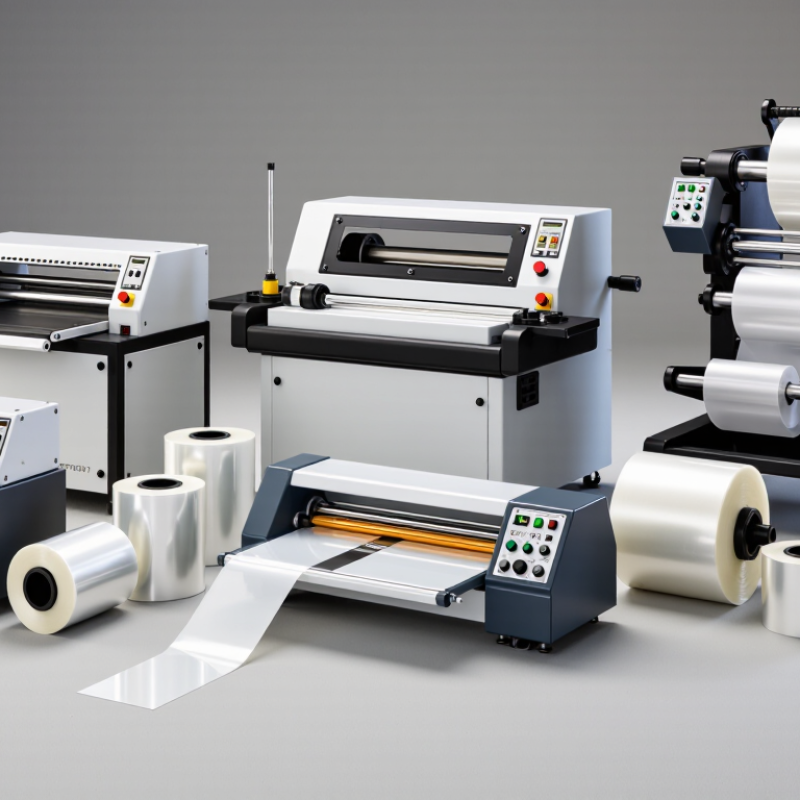
Seven film cutting machines worth considering cover very different production needs. A manual rotary cutter suits short runs of thin film and takes little floor space. A guillotine cutter handles straight crosscuts on stacked sheets, though careful clamping helps prevent slipping. A roll slitter-rewinder is better for continuous rolls, where consistent width and tidy winding matter. Small details count.

For shaped parts, a CNC oscillating-knife table can follow digital patterns without heating the material. A rotary die cutter works well for repeated shapes at higher volumes, but its tooling adds setup cost. A hot-knife cutter can seal some synthetic film edges as it cuts. Results vary by material thickness, so test samples before planning production. A laser cutter offers precise paths, but heat-sensitive films may melt or discolor, and suitable extraction is important.

These seven options are not a universal ranking. Match the machine to film type, roll width, cut tolerance, and daily output. Ask for a trial using your actual material, not just a similar sample. Check changeover time, guarding, cleaning access, and replacement-part availability. A fast machine can still become a bottleneck if setup takes too long. I would not choose from cutting speed alone; it is an easy number to compare, but not the whole story.

How to Match a Film Cutter to Your Needs

A useful film cutter starts with the material, not the machine’s advertised speed. List the films you actually process, including their width, thickness, and whether they have an adhesive liner. A cutter that handles thin protective film may struggle with stiff, layered stock. Fit matters most.

Think about daily workload next. For occasional prototypes, a compact cutter with straightforward controls may be easier to maintain than a high-throughput system. Production teams should check cutting speed, repeatability, and how quickly operators can load rolls. Measure twice. Also confirm the working width against your largest routine job, not an unusual one-off.

Ask how the machine manages corners, small curves, and narrow strips. These details often reveal more than a headline accuracy figure. If possible, bring your own material for a sample cut; inspect edges under good light and check whether the liner stays intact. Check the edges. Review blade availability, software compatibility, training, and service response times before buying. I would not assume that the most automated option is best: extra features can add setup time, and I have seen simple workflows become less simple after an upgrade. A short trial with a typical job can expose that mismatch early.

7 Film Cutting Machine Types: Which Best Fits Your Needs?

Compare each cutter’s relative fit for sheet-based and roll-based work. Ratings are qualitative buying-guide assessments, not measured specifications; capabilities vary by model and material.

How to use this chart: Start with your film format and cutting volume. For frequent roll work, compare plotter, slitter, and roll-fed options; for individual sheets, consider trimmers, guillotines, or flatbed systems. Check the model’s supported materials, cutting width, thickness, and workflow before buying.