What Is the Best Transparent LED Display in China?
China offers a wide range of transparent LED displays, but the best choice depends on the site and the viewing conditions. A glass storefront facing afternoon sun needs different performance from a bright atrium partition. Compare pixel pitch, brightness, transparency, viewing distance, and installation method. Look closely at the demo, too. A screen can appear crisp in a showroom yet lose detail across a wide window.
This guide examines those trade-offs and explains what to check before choosing a Transparent Led Display. A useful engineering principle is: “Judge transparency and image quality together, in the lighting conditions where the display will actually operate.” This is an editorially written principle, not a verified quotation. No source material was provided for a named expert’s statement, so attributing it to a person would risk misleading readers.
Expect practical details, not a universal winner. Fine pixel pitch may improve close-up viewing, but it can affect cost and transparency. A lightweight cabinet may simplify mounting, though the supporting structure still matters. Ask suppliers for measured specifications, installation references, and a live demonstration under comparable lighting. Check how content looks through the display, not only on it. Even these checks cannot remove every uncertainty; reflections, camera exposure, and changing daylight can alter what visitors see. The strongest choice is the one that suits the building, content, and maintenance plan—not merely the most impressive product sheet.
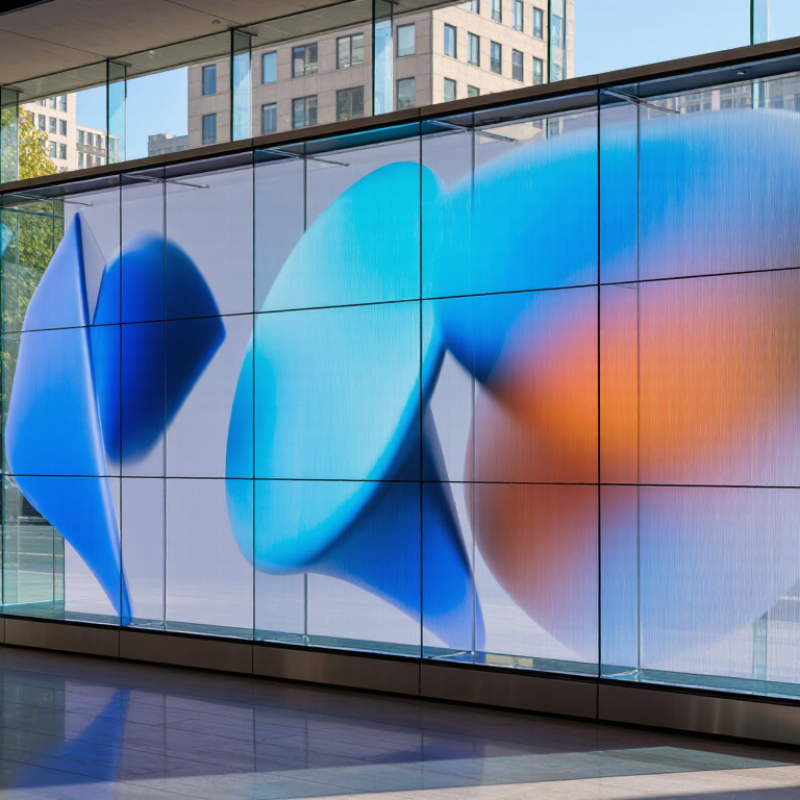
Table of Contents [Hide]
What Is a Transparent LED Display?
What Is a Transparent LED Display?
A transparent LED display forms images with light-emitting diodes arranged on slim bars, mesh, or clear film. Open spaces between the pixels let daylight and views pass through. Unlike a conventional LED wall, it does not need a solid backing panel. From inside a shop, you might still see the street through the display, while animated text appears on the glass. That effect depends on pixel spacing, viewing distance, and ambient light. It is not completely invisible.
MarketsandMarkets’ LED Display Market report projected the broader LED display market to grow from $7.1 billion in 2023 to $12.3 billion by 2028. That figure covers many display types; it is not a forecast for transparent LED alone. Buyers should compare tested transparency, brightness, and pixel pitch, rather than relying on a single headline specification. In bright storefronts, insufficient brightness can wash out content. Very dense pixels may also reduce the open view. There is no universal “best” setup.
Tips: Ask for a sample panel beside the actual glazing. Check the view from both sides, in daylight and after dark. Small details matter. A specification sheet rarely shows the full effect.
What Is the Best Transparent LED Display in China? — What Is a Transparent LED Display?
A transparent LED display uses spaced LEDs or transparent LED modules to show digital content while allowing some light and visibility through the screen. The best option depends on the installation, viewing distance, required transparency, brightness, and maintenance access.
| Display Type | Typical Pixel Pitch | Typical Transparency | Suitable Applications | Main Advantages | Points to Consider |
|---|---|---|---|---|---|
| LED Mesh or Grille Display | Approximately 10–31 mm | Often around 40–70%, depending on LED spacing and structure | Large building façades, outdoor walls, stadiums, and long-distance viewing | Lightweight relative to many solid display walls; airflow and daylight can pass through the open structure. | Coarser pixel pitch is generally better suited to distant viewing. Wind load, structural support, weather protection, and maintenance access require project-specific design. |
| Transparent LED Strip or Bar Display | Commonly approximately 3.9–15 mm | Often around 50–80%, depending on strip width and spacing | Retail windows, commercial façades, atriums, and indoor glass partitions | Offers a balance between image detail and transparency; modular bars can suit large glazed areas. | Check the viewing distance, gaps between bars, sightlines, and whether the supporting frame is visible from inside or outside. |
| Transparent LED Film | Commonly approximately 3.9–20 mm, depending on product design | Often around 80–95% for suitably spaced film formats | Shop windows and glass surfaces where a relatively unobtrusive installation is preferred | Can be applied to or installed close to glass, with limited obstruction of the view when the display is off. | Glass compatibility, surface preparation, ambient light, heat dissipation, wiring, and long-term servicing should be checked before installation. |
| Transparent LED Glass or Glass-Mounted Panel | Commonly approximately 3.9–10 mm, depending on construction | Varies widely; some designs are specified at roughly 60–90% | Showrooms, offices, museums, shopping centres, and architectural glazing | Can provide a cleaner integrated appearance than a conventional opaque LED wall. | Confirm the complete glass assembly, weight, mounting method, thermal requirements, safety requirements, and replacement procedure with the project designer. |
| Selection Factor | What to Check | Practical Guidance |
|---|---|---|
| Viewing distance | Pixel pitch and the closest normal viewing position | Finer pitch generally supports more detailed images at closer distances. Assess the content and actual viewing positions using a sample or a project mock-up. |
| Transparency | Open area, LED layout, structural members, and visibility through the display | Request the transparency specification and confirm how it is measured; the perceived openness can differ with viewing angle and surrounding light. |
| Brightness and ambient light | Indoor or outdoor location, direct sunlight, and nighttime conditions | Specify brightness for the real environment and check whether automatic brightness control and nighttime dimming are available. |
| Installation and service | Mounting structure, cable routing, access, and replacement method | Plan structural support and maintenance access before choosing a format. Outdoor projects also need suitable weather protection and engineering review. |
| Overall suitability | Image detail, transparency, cost, durability, and site constraints | There is no single best transparent LED display for every project. Compare complete system specifications and test a representative sample in the intended location. |
Specification note: The ranges above are general market reference ranges, not guaranteed specifications. Pixel pitch, transparency, brightness, and construction vary by design and manufacturer. Verify current product data, test conditions, certifications, and project requirements before purchase.