Choosing the best Agricultural Drones for your farm is crucial in today's technology-driven world. These advanced tools can revolutionize farming practices. However, understanding the right features and specifications is key. Agricultural drones come in various designs, each tailored for specific tasks like crop monitoring or soil analysis.
When selecting an agricultural drone, consider your farm's unique needs. Are you focusing on large-scale fields or smaller plots? The drone’s flight time and camera quality are essential for effective monitoring. High-resolution cameras provide better insights, while longer flight times ensure you cover more area in less time.
Yet, it's important to acknowledge potential challenges. Not all drones are user-friendly, and a steep learning curve may hinder efficiency. Furthermore, the initial cost of quality drones might outweigh immediate benefits for some farmers. Balancing technology and practical farming needs is essential for a successful outcome.
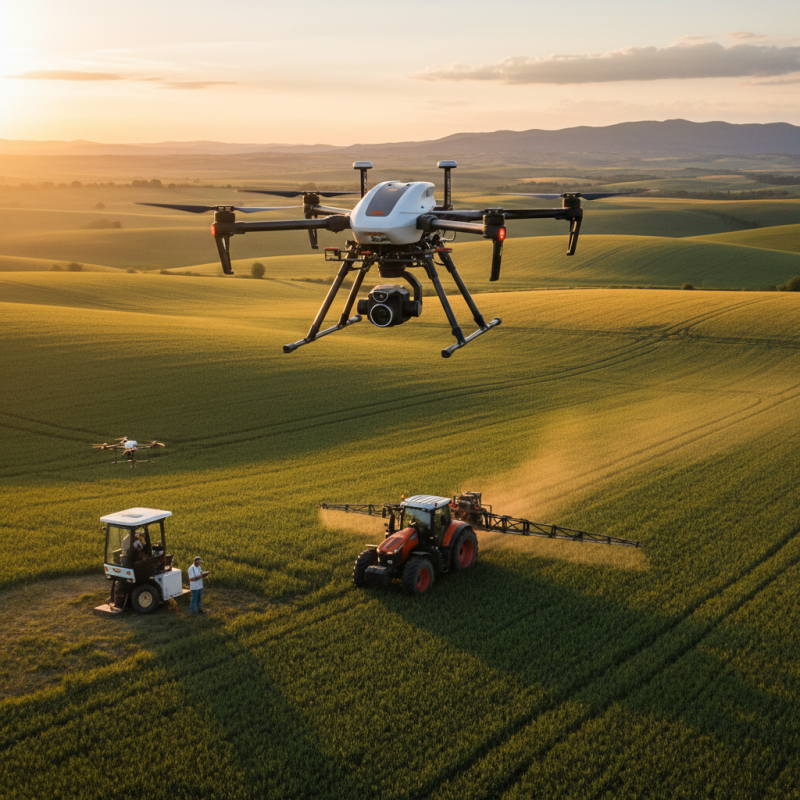
Drones are transforming modern agriculture by enhancing efficiency and transforming traditional farming practices. According to a recent report by Markets and Markets, the agricultural drone market is expected to reach $6.54 billion by 2026, indicating robust growth in this sector. Farmers are increasingly integrating drones for precision agriculture, crop monitoring, and data collection.
With drones, farmers can survey large areas quickly. This technology helps identify crop health issues early. For example, multispectral sensors can detect areas suffering from nutrient deficiencies or pests. The result is more targeted interventions, saving time and resources.
Tip: Start with a clear purpose for your drone use. Understand if you need it for mapping, spraying, or surveillance.
However, not every drone is suitable for every farm. Some models may lack the necessary features for precision agriculture. It’s essential to analyze factors such as flight time, payload capacity, and sensor capabilities. Without proper assessment, farmers might invest in unsuitable technology that does not meet their specific needs.
Tip: Research local regulations on drone usage. Compliance is crucial for safe and legal operation.
Drones also gather vast amounts of data. This can lead to information overload without proper analysis tools. Farmers should consider integrating drones with software that helps interpret data effectively. Balancing technology with practical farming knowledge remains vital for maximizing benefits.

When selecting agricultural drones, several key features need careful consideration. One important aspect is the sensor quality. Drones equipped with high-resolution cameras can provide detailed imagery of crops. According to a report by MarketsandMarkets, the agricultural drone market is projected to reach $4 billion by 2024. This growth highlights the industry's increasing reliance on sophisticated technology for farming efficiency.
Battery life is another critical factor. A drone that can operate longer facilitates wider coverage in a single flight. Farmers often report issues with battery duration, which can limit their operational efficiency. Additionally, software compatibility is crucial for integrating drone data with existing farm management systems. A seamless connection ensures that farmers can analyze data effectively and make informed decisions.
Cost is always a consideration. Some drones may offer advanced features but come with a hefty price tag. It’s important to evaluate how these features align with specific farming needs. Not every farm requires the latest technology. Often, farmers must reflect on their unique requirements and budget constraints before making a purchase. The optimal choice balances performance and cost-effectiveness.
When considering agricultural drones for your farm, the cost-benefit ratio is vital. Evaluate initial costs against long-term benefits. Farming drones can improve efficiency. They optimize crop monitoring and resource allocation. While the upfront investment may be high, potential savings can offset these costs.
Conduct a thorough analysis of usage scenarios. If you choose to monitor large areas, drones can save hours of manual labor. However, the technology requires training. Farmers must understand data interpretation. This adds to operational costs, which is a key factor to consider.
Research shows that successful drone integration can lead to higher yields. But it doesn't guarantee success for all farms. Different soil types may require unique approaches. Analyze your specific needs and local conditions. Technology is not a one-size-fits-all solution. This requires careful thought before making a decision.
When choosing agricultural drones, it's crucial to understand the types available today. There are generally three categories: fixed-wing drones, multi-rotor drones, and hybrid drones. Each has unique features suited for specific tasks on a farm. Fixed-wing drones cover larger areas, making them ideal for surveying extensive fields. However, they may struggle with obstacle avoidance. Multi-rotor drones offer excellent maneuverability but have shorter flight times. They excel in precision tasks such as crop spraying and monitoring. Hybrid drones aim to combine the strengths of both types, but they are often more costly.
When assessing drones, it's vital to consider your needs. Think about the size of your farm and the specific tasks you want to accomplish. Assess the terrain and any obstacles. A drone with effective obstacle detection systems can prevent accidents. It's also wise to review the battery life and payload capacity of potential drones. Keeping an eye on these metrics ensures you choose a reliable option.
Take note that not all drones are user-friendly. Some may require extensive training. Conducting thorough research helps avoid unnecessary complications. Consider seeking expert advice or attending demonstrations. Engaging with fellow farmers can provide valuable insights, and often, they share firsthand experiences on different models.
The agricultural drone market is evolving rapidly. New technologies are emerging that can reshape farming practices. Enhanced crop monitoring, precise spraying, and data collection are just a few capabilities. Farmers can now collect data more efficiently, allowing for better decision-making.
However, the adoption of these drones isn’t without challenges. Farmers may struggle with integration into existing workflows. There’s also a learning curve associated with using drone technology effectively. Some tools may be complex and require training to operate. Without proper knowledge, farmers could miss out on key benefits.
Future trends point toward increased automation and AI integration. These advancements promise to make drones even more efficient. Yet, reliance on technology can also raise questions about dependency. It's important to consider balance while embracing innovation. Farmers must evaluate how these tools complement traditional practices, ensuring they don’t lose touch with foundational farming knowledge.