2026 Top Puppy Collar Types for Every Breed and Size

Choosing a Puppy Collar is about more than color or price. A growing puppy needs a collar that feels light, fits securely, and suits daily routines. A tiny toy breed may need a narrow, soft design, while a sturdy, larger puppy may benefit from a wider adjustable band. The right choice can change as your puppy grows. Check the fit often.

This guide compares common options, including flat buckle collars, quick-release styles, martingale collars, and soft padded designs. Each has trade-offs. A flat collar can hold an identification tag, while a martingale may help some dogs slip out of ordinary collars when properly fitted and used with guidance. No collar is perfect. Watch for rubbing beneath the strap, frayed stitching, or a buckle that shifts during a walk. You should be able to slide two fingers between the collar and your puppy’s neck, without letting it slip over the head.

Real-life details matter. A damp collar after a rainy walk, a tag tapping against a metal bowl, or a puppy chewing the strap can reveal whether a style works at home. Remove the collar during crate time if it could snag, and supervise wear, especially with young puppies. Recheck fit as your puppy gains weight and height. Some sizing advice is easy to overlook. When fit, skin sensitivity, or walking behavior raises concern, ask a veterinarian or qualified trainer for tailored guidance.
2026 Top Puppy Collar Types for Every Breed and Size

Understanding Puppy Collar Needs by Age, Breed, and Size

A puppy’s collar should fit the dog in front of you, not the adult dog you imagine. During growth, check the fit weekly and after noticeable weight changes. You should slide two fingers beneath the collar without forcing them. Growth is uneven. A small puppy may outgrow a collar before its first buckle shows wear, while a slower-growing dog may need fewer adjustments. Ask your veterinarian to check fit during routine visits, especially if the collar rubs, slips over the head, or leaves marks.

Breed and build influence collar choice. A narrow-headed sighthound may back out of a standard flat collar, while a broad-necked puppy may need careful sizing to avoid pressure. Toy breeds often need lightweight hardware; larger puppies need sturdy, well-fitted materials without excess weight. Don’t guess from breed labels alone. Littermates can differ.

Weight changes also matter. The Association for Pet Obesity Prevention’s 2022 survey estimated that 59% of U.S. dogs were overweight or obese; the figure was not specific to puppies. It still highlights why fit should be reassessed as a dog’s body changes. A soft tape measure can help, but repeat the measurement at the same neck position. I would not rely on one reading. That check helps.


Puppy Collar Needs by Breed Size

Approximate adult weight ranges for selected breeds (lb)

These ranges illustrate how much adult size can differ between breeds; individual dogs may fall outside them. Weight is not a substitute for measuring your puppy’s neck. For everyday identification, choose a lightweight, adjustable flat collar, check that two fingers fit comfortably underneath, and recheck the fit often as your puppy grows. A properly fitted harness is another option for leash walks.

Measuring Your Puppy for a Safe, Comfortable Collar Fit

Measure where the collar will sit, usually near the base of your puppy’s neck. Keep the tape snug, but do not pull it tight. Write down the measurement and check the fit with two flat fingers beneath the collar. Not too tight. If it slides over the ears, it may be too loose; if your fingers cannot fit comfortably, loosen it.

A 2020 Veterinary Record study by Carter and colleagues measured pressure from six collar designs and two harnesses on eight dogs. The researchers found that pressure varied with design and leash force. This small study is not a sizing guide, but it shows why a collar should not be treated as harmless when it pulls. Choose a smooth, lightweight collar, and check for rubbing around the throat and behind the ears.

Puppies grow quickly, and a measurement can become outdated within days. Recheck the fit weekly during growth spurts, and after grooming if your puppy has a thick coat. Watch your puppy walk, sit, and turn its head; a tape measure cannot show every pinch point. I can still misjudge a fluffy neck by eye, so measure again rather than guessing. Then recheck.

Comparing Puppy Collar Types and Their Best Uses

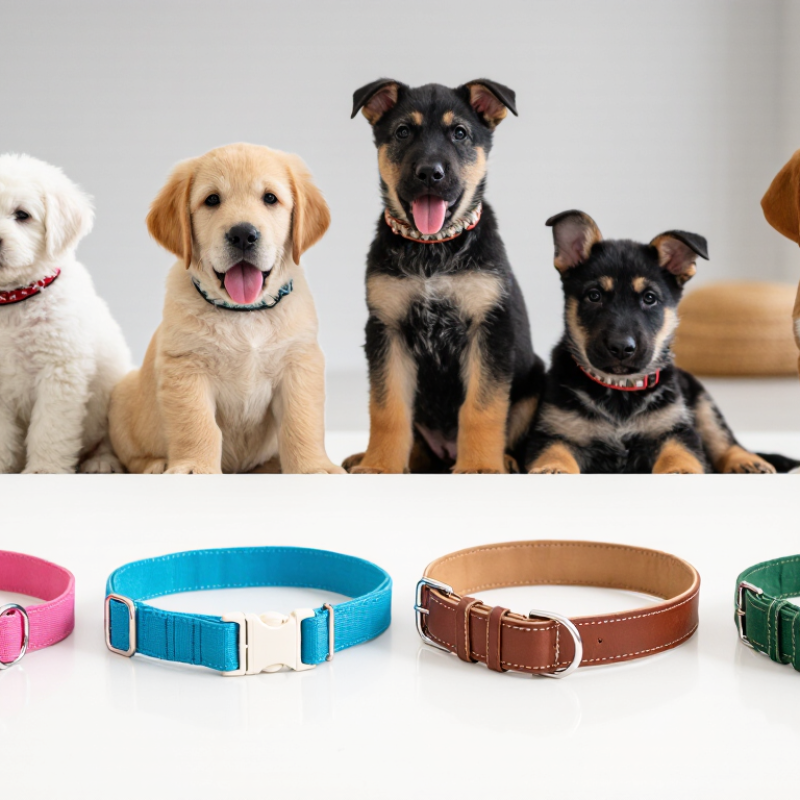
Flat buckle collars suit most puppies for everyday identification and leash attachment. Choose a lightweight, adjustable model with smooth edges; bulky hardware can bother a tiny dog. Check the fit regularly: two fingers should slide between collar and neck, without the collar slipping over the head. Growth can make last week’s fit unreliable.

A soft, narrow collar may feel less intrusive on toy breeds or puppies with sensitive skin, but inspect seams for rubbing. Martingale collars can help some narrow-headed dogs resist backing out during walks. They need careful adjustment and supervision, and are not a substitute for training. Breakaway collars release under pressure, which can reduce snagging risk indoors. That same release means they may not stay attached during walks.

Fit matters most. Collar choice depends on neck shape, coat, activity, and temperament, not breed alone. A puppy that scratches repeatedly, coughs, or develops redness may need a different fit or a break from wearing it. It is easy to postpone rechecking the buckle; don’t. Remove collars during unsupervised play if they catch on crates or furniture, and use a well-fitted harness when collar pressure is uncomfortable. No collar type works perfectly for every puppy.

Choosing Collar Materials, Closures, and Safety Features

A puppy collar should fit the dog in front of you, not just match a breed-size chart. APPA’s 2025 National Pet Owners Survey estimates that 68 million U.S. households have dogs, underscoring how common everyday collar choices are. Small puppies can outgrow a collar quickly; check the fit as they grow. Two fingers should slide underneath. Still, that test is not perfect: coat thickness and collar shape affect how snug it feels. Watch for rubbing, slipping, or difficulty swallowing.

Nylon is light, dries quickly, and comes in many widths, but frayed stitching can weaken it. Leather may soften with use, though it needs care when wet. Water-resistant coated webbing can be easier to wipe clean, but inspect its edges for cracking. Choose a closure you can open quickly without pinching skin. Metal hardware can be sturdy, yet heavy fittings may feel bulky on a very small puppy.

Reflective stitching helps make a dog easier to spot at dusk; it does not replace a leash or supervision. Keep an ID tag attached, and check buckles, seams, and rings regularly. For a dog that pulls hard, consider whether neck pressure is appropriate; a well-fitted harness may suit walks better. No collar stays safe when damaged or poorly fitted.

Adjusting and Replacing a Collar as Your Puppy Grows

A puppy’s collar can become tight between routine checks. Veterinary references place small-breed maturity at roughly 6–12 months and large-breed maturity at 12–18 months; giant breeds may take longer (Merck Veterinary Manual, “Puppy Growth and Development”). Growth varies, even within one litter. Check fit weekly during rapid growth, and replace the collar when it no longer sits comfortably. You should slide two fingers between collar and neck without forcing them. Too tight leaves pressure marks; too loose can slip over the head.

Choose an adjustable collar with a smooth, secure buckle and no rough edges. Check beneath the strap for damp fur, redness, or rubbed patches, especially after walks. If irritation persists, remove the collar and ask a veterinarian for advice. AAHA’s Canine Life Stage Guidelines explain that puppyhood ends with physical maturity, which differs by size and breed. That’s useful context, but it cannot tell you exactly when your puppy’s collar needs replacing. A quick fit check matters more than the calendar.

Tips: Measure the neck with a soft tape, then recheck after meals or growth spurts. Keep the tape snug, not tight. Replace a collar if stitching frays, the buckle cracks, or adjustment holes stretch. I used to think “one more notch” was enough; sometimes it wasn’t. Don’t wait for visible discomfort.

2026 Top Puppy Collar Types for Every Breed and Size - Adjusting and Replacing a Collar as Your Puppy Grows

Collar size varies by individual puppy, even within the same breed. Measure around the neck where the collar sits, then use the collar’s stated adjustment range to choose a size. The ranges below are general examples, not breed-specific guarantees.

Collar type Common use Illustrative neck range Adjustment and growth advice Replace when
Lightweight flat collar Everyday identification and leash attachment for most puppies who walk comfortably on a collar. About 15–25 cm (6–10 in) for many extra-small sizes; check the product’s fit range. Choose a lightweight, adjustable fit. Recheck weekly during rapid growth and leave room for two fingers between collar and neck. It reaches the tightest setting, becomes too tight, or shows fraying, cracked hardware, or a faulty buckle.
Adjustable nylon collar A practical everyday option for small, medium, and large puppies; dries relatively quickly after light exposure to water. Common ranges include 23–33 cm (9–13 in), 30–46 cm (12–18 in), and 41–61 cm (16–24 in), depending on size. Adjust as the neck grows, keeping the collar flat and snug without pinching. Check for twisting or rubbing, especially after walks. The webbing is damaged, the fastener no longer holds securely, or the collar cannot be adjusted to a safe fit.
Soft padded collar May help reduce rubbing for puppies with sensitive skin or short coats, provided the collar fits correctly. Available across a range of sizes; use the measured neck circumference and the maker’s adjustment range. Check beneath the padding often for moisture, trapped dirt, or skin irritation. Padding does not replace correct sizing. Padding becomes compressed or rough, seams loosen, or the collar stays damp or causes irritation.
Martingale collar Can provide a limited tightening action for dogs whose heads are narrower than their necks. Use only with suitable guidance and supervision. Size by both neck and head measurements; a neck measurement alone may not ensure a secure fit. Set the adjustment so it tightens only enough to prevent slipping and does not constrict the throat. Remove it when the puppy is unattended. It cannot be adjusted to prevent slipping without excessive tightening, or its stitching or hardware is damaged.
Breakaway collar Designed to release if caught on an object; generally intended for identification rather than leash walking. Choose the adjustment range that matches the puppy’s measured neck while allowing a comfortable fit. Use the release feature only for its intended purpose. For walks, use a secure, suitable walking setup recommended by a qualified professional. The release mechanism opens unpredictably, fails to function as intended, or the collar no longer fits.
Wide or broad collar May suit some larger, sturdier-built puppies when the width is comfortable and does not restrict movement. Available in multiple neck ranges; select by measurement rather than expected adult breed size. Check that the collar does not press against the throat or limit normal head movement. A wider collar may be too bulky for a small puppy. It becomes heavy or uncomfortable, the puppy outgrows the adjustment range, or any part is worn or damaged.

Fit and replacement check: Measure the neck with a flexible tape, then confirm the collar allows about two fingers to fit comfortably beneath it without slipping over the head. Check the fit at least weekly while your puppy is growing, and inspect the skin, stitching, buckle, and attachment points regularly. Replace the collar as soon as it becomes too small, damaged, or unreliable.