Choosing the right LED Tri-Proof Light supplier requires more than comparing product photos or advertised prices. Industrial workshops, parking areas, cold rooms, tunnels, and warehouses demand dependable lighting under dust, moisture, vibration, and temperature changes. This guide introduces ten leading suppliers worldwide and examines how their products perform beyond the catalogue.
The comparison considers luminous efficacy, beam distribution, color consistency, IP and IK protection, thermal design, driver quality, warranty terms, and documented testing. Manufacturing capacity also matters. A supplier may offer attractive pricing but struggle with stable lead times or replacement support. Conversely, a premium brand may provide stronger engineering and quality control while exceeding a limited project budget. Site experience often reveals these differences.
Product claims should be checked against technical datasheets, test reports, certifications, and real project references. A high lumen figure alone does not guarantee useful illumination. Glare, mounting height, ambient temperature, and maintenance access can change the result. Small details matter, such as sealed connectors, stainless-steel clips, emergency options, and accessible drivers.
The ranking is not absolute. It reflects practical purchasing factors and available evidence, not one universal winner. Some suppliers disclose extensive test data; others provide less, which makes comparison less certain. That gap deserves attention. Buyers should request samples, confirm photometric files, and test performance in representative conditions before committing to large volumes. The following overview offers a careful starting point for distributors, contractors, consultants, and facility managers seeking reliable LED Tri-Proof Light solutions.
Top 10 LED Tri-Proof Light Suppliers Worldwide
LED tri-proof lights are built for dust, moisture, impact, and long operating cycles. Their ratings deserve careful reading.
IP65 means dust-tight protection and resistance to water jets. IP66 adds stronger water-jet protection. IP67 supports temporary immersion, while IP69K addresses high-pressure, high-temperature washing. These distinctions matter in food-processing rooms, parking areas, tunnels, and outdoor service zones.
Impact ratings also reveal practical durability. Under IEC 62262, IK08 withstands 5 joules of impact, while IK10 withstands 20 joules. A dropped tool can expose weak housings quickly. Good installation still matters.
The 50,000-hour figure needs context. The U.S. Department of Energy’s solid-state lighting guidance links LED life to lumen maintenance, temperature, drivers, and operating conditions. LM-80 and TM-21 testing can support lumen-maintenance projections, but they do not guarantee identical field results. Heat remains the quiet failure factor. A poorly ventilated fixture may age faster than expected.
Tips: Ask for the complete test report, not only the IP or IK label. Check ambient-temperature limits, L70 assumptions, surge protection, driver warranty, and photometric files. Also inspect seals and cable glands during sampling. In real projects, these small parts often decide whether IP69K performance survives repeated cleaning. Even reputable specifications may hide uncertainty. That deserves a second look.

Top 10 LED Tri-Proof Light Suppliers Worldwide are often compared through three practical benchmarks: efficacy, color temperature, and warranty coverage. A credible target is 120–160 lm/W at luminaire level, not chip level. The U.S. Department of Energy’s Solid-State Lighting reports distinguish these measurements clearly. DOE CALiPER testing also found that published claims can differ from independent results. That gap deserves attention.
For warehouses, tunnels, and parking areas, 4000K–6500K supports crisp visibility. However, higher color temperature may increase glare in reflective spaces. The International Energy Agency’s lighting analysis confirms that LED efficiency improves energy performance, but product quality still depends on optics, drivers, thermal design, and controls. A five-year warranty is useful only when it covers the driver, housing, and lumen maintenance. Ask for LM-80, TM-21, and LM-79 documentation. Check whether the 160 lm/W figure includes losses from the entire fixture. It often does not.
Tips: Request independent test reports, IP and IK ratings, operating-temperature limits, and a written warranty claim process. Compare delivered lumens, not impressive laboratory numbers. Review installation records from similar sites. A supplier with excellent specifications may still struggle with poor heat dissipation. That is where careful evaluation matters.
For “Top 10 LED Tri-Proof Light Suppliers Worldwide,” ranking requires more than catalog size. Quality begins with verified performance, not attractive product photos. We examine lumen maintenance, thermal design, driver stability, and sealing consistency. Independent testing should support reported efficacy and lifetime claims. The U.S. Department of Energy’s Solid-State Lighting reports show that modern commercial LEDs can exceed 130 lumens per watt under suitable conditions. However, real installations may perform worse in hot, dusty spaces.
Certifications form the second filter. We check testing against IEC 60598 safety requirements, IEC 60529 ingress protection, and IEC 62262 impact resistance. Documentation must identify the test laboratory, model number, and valid report date. A CE mark alone does not prove equal quality across suppliers. Certification gaps are easy to miss. We also review warranty terms, batch traceability, and failure data from completed projects. The International Energy Agency reported that LEDs represented about half of global lighting sales in 2022, showing strong adoption but not automatic reliability.
Pricing receives a practical, not purely mathematical, score. We compare fixture cost, delivery terms, energy use, maintenance access, and expected replacement rates. A cheaper unit may lose value after early driver failures. Yet premium pricing does not guarantee better engineering. That is the uncomfortable part. Our weighting remains debatable, especially between laboratory results and field experience. Suppliers with transparent samples, stable pricing, and responsive technical support score higher. Fluorescent replacement projects also deserve separate calculations, because installation labor can outweigh modest fixture-price differences.
Ranking Criteria: Quality, Certifications, and Pricing
The chart presents a transparent evaluation-weighting model for comparing international LED tri-proof light suppliers. Quality receives the highest weight because performance, durability, and product consistency directly affect long-term operating costs. Certifications verify compliance and safety, while pricing supports value-based purchasing decisions.
Reliable suppliers usually provide photometric files, lumen data, warranty terms, and test documentation. These details help contractors compare performance instead of trusting packaging claims.
In real projects, heat management matters greatly. A fixture installed in a cold warehouse behaves differently from one exposed to humid loading bays. Some suppliers communicate this clearly. Others do not. That gap deserves attention.
Tips: Check operating temperature, surge protection, beam angle, mounting clips, and replacement availability before ordering. Ask for samples under real installation conditions. A small trial can reveal diffuser yellowing, loose wiring, or uneven light distribution. Market rankings are useful, but no ranking is perfect. Supplier performance can change with lead times, regional service, and quality control. Experienced buyers should review current evidence, not rely only on popularity or online visibility.
LED Tri-Proof Light Suppliers Worldwide: Applications, Standards, and Energy-Saving Performance
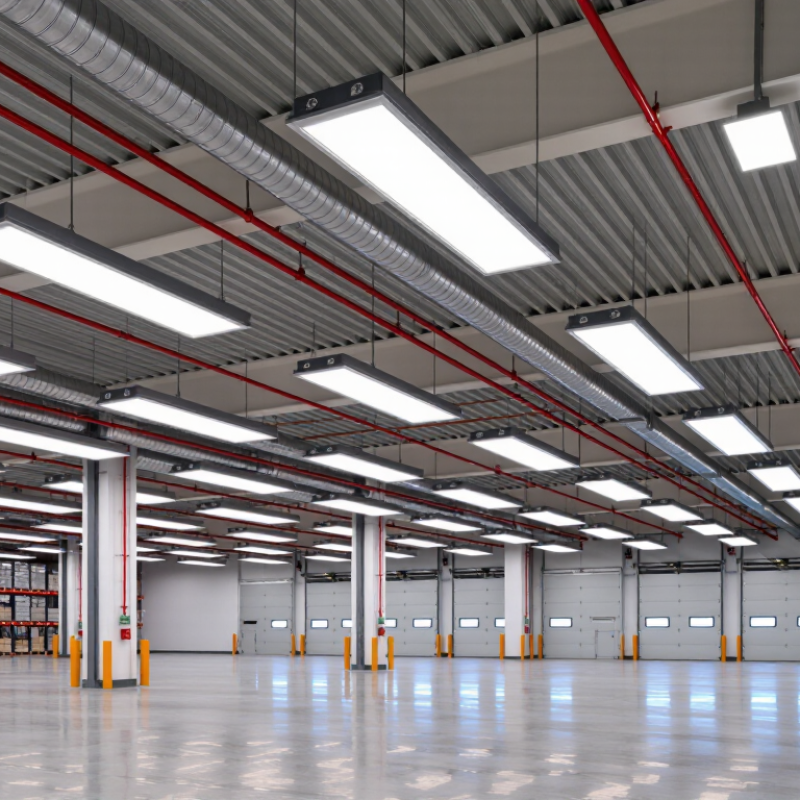
LED tri-proof lights suit demanding spaces where dust, moisture, and impact are common. Warehouses use them above aisles and loading zones. Parking garages, workshops, tunnels, food-processing rooms, and covered walkways also benefit from sealed linear housings. In practice, beam angle matters as much as wattage. A narrow beam can create bright stripes between storage racks. A wider distribution usually produces more even floor illumination.
Installation quality affects long-term performance. Look for products tested under IEC 60598-1 and suitable regional requirements. IP65 or IP66 protection helps resist water and dust, while an IK08 rating supports impact resistance. Confirm the operating temperature before installation. Cold storage rooms and hot mechanical areas can exceed ordinary specifications. Mounting clips should resist vibration, and cable entries need proper sealing. Small gaps cause large problems.
Energy savings depend on the complete system. Compare delivered lumens, not advertised wattage alone. A 40-watt fitting producing 6,000 lumens may outperform a 50-watt model with weaker optics. Occupancy sensors and daylight controls can reduce unnecessary runtime. Power-factor correction also supports stable commercial operation. On site, installers should check voltage, emergency-lighting requirements, and dimming compatibility. A frequent mistake is assuming every sealed fixture is maintenance-free. Lenses still collect grease, dust, and condensation. Supplier documentation, photometric files, warranty terms, and replacement-part availability deserve careful review. Some projects overestimate savings because cleaning and control settings were ignored.
| Rank | Anonymous Supplier Profile | Primary Supply Region | Typical LED Tri-Proof Configuration | Key Applications | Typical Protection and Mechanical Ratings | Relevant Installation and Compliance Standards | Typical Efficacy | Estimated Energy Saving vs. 2 × 36 W Fluorescent Fixture | Typical Service Life |
|---|---|---|---|---|---|---|---|---|---|
| 1 | Industrial Lighting Specialist High-volume linear fixture supplier | Western Europe | 30–60 W; 1,200–1,800 mm housing; frosted polycarbonate diffuser; 4,000–6,500 K | Warehouses Factories Workshops | IP65–IP66; IK08; operating temperature typically −20°C to +45°C | IEC/EN 60598-1; IEC/EN 60598-2-1; IEC 60529; IEC 62262; RoHS | 125–155 lm/W | Approximately 40–60% | 50,000–70,000 hours at L70 |
| 2 | Commercial Retrofit Supplier Focused on replacement projects | North America | 25–55 W; 2–5 ft formats; selectable wattage or color temperature options | Retail Backrooms Parking Structures Utility Areas | IP65; impact-resistant lens; 0–10 V dimming commonly available | UL 1598; UL 8750; IEC 60529 where applicable; local electrical codes; DLC listing may apply | 120–150 lm/W | Approximately 35–55% | 50,000–60,000 hours at L70 |
| 3 | Harsh-Environment Lighting Supplier Designed for moisture and dust exposure | East Asia | 40–80 W; sealed aluminum or polycarbonate body; wide-beam optics; 90–150 lm/W options | Food Processing Cold Storage Washdown Zones | IP66–IP69K options; IK08–IK10; stainless-steel clips available | IEC 60598-1; IEC 60598-2-1; IEC 60529; IEC 62262; HACCP-compatible installation practices where required | 115–150 lm/W | Approximately 40–60% | 50,000–80,000 hours at L70 |
| 4 | Energy-Efficiency Project Supplier Offers controls-ready lighting packages | Northern Europe | 25–50 W; DALI-2, corridor-function, occupancy-sensor, and emergency options | Logistics Centers Public Buildings Service Corridors | IP65; IK08; power factor commonly ≥0.90; low-flicker driver options | EN 60598-1; EN 60598-2-1; IEC 62386 for DALI systems; IEC 60529; EN 62471 | 130–165 lm/W | Approximately 45–65% with occupancy control | 60,000–80,000 hours at L80 |
| 5 | Heavy-Duty Infrastructure Supplier Provides reinforced fixtures for industrial sites | Central Europe | 35–70 W; reinforced housing; through-wiring and surface-mount accessories | Transport Hubs Parking Garages Industrial Tunnels | IP66; IK10; surge protection commonly 4–6 kV; corrosion-resistant hardware | EN 60598-1; EN 60598-2-1; IEC 60529; IEC 62262; IEC 61643 for surge-protection components where specified | 110–145 lm/W | Approximately 35–55% | 50,000–70,000 hours at L70 |
| 6 | OEM and Private-Label Supplier Configurable platform for project integrators | Southeast Asia | 20–60 W; modular lengths; customized connectors, optics, and cable entries | Commercial Kitchens Workshops Agricultural Buildings | IP65–IP66; IK08; silicone gasket; optional stainless-steel mounting clips | IEC 60598-1; IEC 60598-2-1; IEC 60529; RoHS; EMC requirements according to destination market | 115–150 lm/W | Approximately 40–60% | 50,000–70,000 hours at L70 |
| 7 | Cold-Climate Lighting Supplier Optimized for low-temperature operation | Scandinavia and Baltic Region | 30–65 W; high-output LED boards; low-temperature driver; 3,000–5,700 K | Cold Rooms Outdoor Canopies Unheated Warehouses | IP66; IK08; typical operating range −30°C to +45°C | EN 60598-1; EN 60598-2-1; IEC 60529; IEC 62262; regional low-voltage and EMC requirements | 120–155 lm/W | Approximately 40–60% | 60,000–80,000 hours at L80 |
| 8 | Food and Hygiene Lighting Supplier Designed for cleanable and sealed environments | Western Europe and Oceania | 25–55 W; smooth housing; shatter-resistant diffuser; hygienic surface design | Food Plants Laboratories Healthcare Service Areas | IP66–IP69K options; IK08; sealed end caps; low-glare diffuser options | EN 60598-1; EN 60598-2-1; IEC 60529; IEC 62262; photobiological safety assessed under IEC/EN 62471 | 115–145 lm/W | Approximately 40–55% | 50,000–70,000 hours at L70 |
| 9 | Emergency and Life-Safety Lighting Supplier Offers maintained and non-maintained emergency versions | United Kingdom and Ireland | 20–50 W; self-contained emergency battery options; 3-hour emergency variants available | Schools Hospitals Public Facilities | IP65; IK08; battery and indicator testing functions depend on configuration | EN 60598-1; EN 60598-2-1; EN 60598-2-22 for emergency luminaires; IEC 60529; local emergency-lighting rules | 105–140 lm/W | Approximately 35–55% | 50,000–70,000 hours at L70 |
| 10 | Smart Industrial Lighting Supplier Supports connected monitoring and lighting controls | East Asia and the Middle East | 30–70 W; wireless or wired control options; sensor-ready driver; emergency compatibility | Smart Warehouses Manufacturing Lines Distribution Centers | IP65–IP66; IK08; power factor commonly ≥0.90; surge protection options | IEC 60598-1; IEC 60598-2-1; IEC 60529; IEC 62262; IEC 62386 for DALI-based systems where applicable | 125–160 lm/W | Approximately 45–70% with dimming and occupancy control | 60,000–80,000 hours at L80 |