China Top Bluetooth Smart Glasses Manufacturers?
China has become an important sourcing destination for wearable electronics, including Bluetooth Smart Glasses. Yet “manufacturer” can describe different businesses: some design products, some assemble them, and others coordinate components and production. That distinction matters. A polished product photo reveals little about microphone performance, lens options, battery life, or how comfortably the frames sit after several hours.
This guide introduces Chinese manufacturers and the practical questions buyers can ask before choosing a supplier. Look for clear product specifications, sample availability, documented quality checks, and direct answers about customization and production capacity. Ask how the company tests Bluetooth connectivity, call clarity, charging, and daily wear; request details rather than relying on broad claims. If possible, compare a physical sample with the written specifications. Small gaps are informative.
Experience helps, but it is not proof on its own. A capable supplier should explain its process in plain terms and identify what it cannot customize. Buyers should also clarify warranty support, packaging, lead times, and communication expectations before placing an order. These details can prevent expensive misunderstandings. There is no single best factory for every project. A startup seeking a small run may need a different partner from a retailer ordering established models. Even a careful review has limits; supplier information can change, and sample performance may not fully reflect mass production. Use the comparison as a starting point, then verify important claims directly.
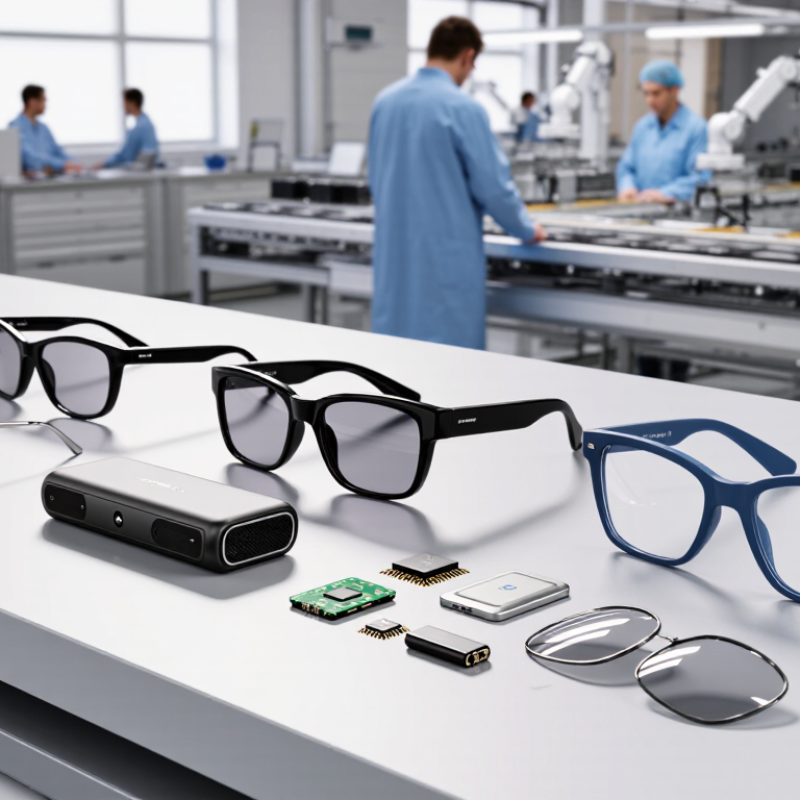
What Bluetooth Smart Glasses Are and How They Work
Bluetooth smart glasses combine eyewear with small electronic components, usually including speakers, microphones, a battery, and control buttons or touch sensors. They connect wirelessly to a phone or computer using Bluetooth. The phone handles calls, music, and voice-assistant requests, then sends audio to the glasses. Bluetooth does not provide internet access by itself.
During a call, built-in microphones pick up your voice while discreet speakers deliver sound near your ears. Some designs use open-ear audio, so you can still hear nearby sounds. Performance depends on fit, room noise, battery condition, and the connected device. A busy street can make calls harder to understand. The term “smart glasses” covers different features, so check the specifications rather than assuming every pair has a display or camera.
Tips: Try the glasses in a quiet room, then test them outdoors. Check microphone clarity, comfort, and controls before relying on them for long calls. Keep the phone nearby; walls and interference can weaken the connection. One small detail is easy to miss: audio may sound different to each wearer.
China’s Bluetooth Smart Glasses Manufacturing Landscape
China’s Bluetooth smart-glasses manufacturing landscape draws on mature electronics supply chains, from miniature speakers and microphones to compact batteries and optical frames. Bluetooth SIG’s 2024 Market Update projects annual Bluetooth device shipments will reach 7.5 billion by 2028. This is a broad connectivity forecast, not a glasses-specific sales estimate. Still, it signals a large pool of component and testing expertise that Chinese manufacturers can draw upon. On a production line, small details matter: microphone placement near the hinge can affect call clarity, while a tight frame can complicate antenna performance. The parts must work together.
Manufacturers typically balance battery life, comfort, audio quality, and stable phone connections. Bluetooth qualification and repeatable production tests help check interoperability, but they do not guarantee a comfortable fit or clear sound in a busy street. Those details need real-world evaluation. Factory capability also varies; a polished prototype is not proof of consistent output across thousands of units. Buyers should examine material traceability, assembly tolerances, battery testing, and post-production defect data. One weakness remains: public market reports rarely separate Bluetooth glasses from other wearable devices, so comparisons can be imprecise. That gap deserves caution.
China’s Bluetooth Smart Glasses Manufacturing Landscape
Bluetooth LE PHY data rates are standardized technical options that manufacturers can consider when designing smart glasses.
Rates shown are nominal PHY rates defined by the Bluetooth Core Specification; actual application throughput varies with protocol overhead and operating conditions.
Key Criteria for Evaluating Chinese Manufacturers
When evaluating Chinese Bluetooth smart glasses manufacturers, look beyond product photos and headline specifications. Ask for a working sample and test call clarity in a busy room, Bluetooth reconnection after walking out of range, and battery life during repeated use. Check whether lens options, frame dimensions, microphone placement, and charging methods match your market. A neat sample is useful, but it does not prove every production unit will perform the same way.
Review the manufacturer’s engineering and quality process. Request written test procedures, inspection records, and details about firmware updates and defect handling. Ask how the team checks hinge durability, audio consistency, and charging contacts across a production batch. If possible, compare samples from different production runs. Small differences matter. One practical caution: a supplier may answer confidently without providing measurable evidence, so verify claims rather than relying on a polished presentation.
Tip: Send a clear specification sheet, including target battery runtime, frame weight, supported phone systems, and acceptance criteria. Ask for a pilot order before scaling. Keep communication records and document agreed changes. This takes time. It can feel overly careful, and I have sometimes underestimated how much a minor fit adjustment affects daily comfort. Evaluate response speed too, but weigh it alongside technical support and consistent sample quality.
Notable Bluetooth Smart Glasses Manufacturers in China
China’s Bluetooth smart-glasses sector includes manufacturers that combine eyewear assembly with wireless electronics and acoustic engineering. Many offer OEM or ODM services, allowing buyers to specify frame materials, controls, microphones, and charging methods. Capabilities vary considerably.
Ask how a factory handles the details. Can it keep Bluetooth performance stable when the temples are folded? Are microphones tested in a noisy room, not just at a quiet desk? Small checks matter. Review sample fit, hinge movement, speaker leakage, battery reports, and firmware support before discussing large production runs. Request clear records for component sourcing and quality inspections, too.
A useful supplier should explain trade-offs in plain language. A thinner frame may feel lighter, but it can leave less room for a battery or antenna. That balance is easy to overlook. Ask for repeatable test results and confirm whether the same components will be used in samples and production units. Factory visits or live video checks can help verify equipment and assembly steps, although they cannot replace independent testing. Even experienced teams may need several design rounds; early samples are rarely perfect.
How to Compare Suppliers and Select a Manufacturer
Comparing China-based Bluetooth smart glasses suppliers takes more than reviewing a product page. Ask for a working sample and test it in ordinary settings: pair it with two phone models, make a call beside a busy road, and play audio for several hours. Note connection drops, microphone clarity, heat near the temples, and whether the frames feel balanced. Small discomfort becomes obvious after a long wear.
Request written specifications for battery capacity, charging time, Bluetooth version, materials, and claimed water resistance. Then compare those details with your test results. Ask how the supplier checks hinge durability, lens consistency, and audio performance during production. A clear inspection plan matters. So does a process for handling defects and replacing parts. A polished sample can still differ from a production batch, so ask how samples are approved and changes are recorded.
Compare suppliers on more than unit price. Review minimum order quantities, tooling costs, lead times, communication response, and support after delivery. Request relevant factory or quality-system records, but verify that they match the production site. It is easy to underestimate firmware updates and component substitutions; ask who approves them. No scorecard removes all uncertainty. I would give extra weight to direct test evidence, even when it complicates the comparison.