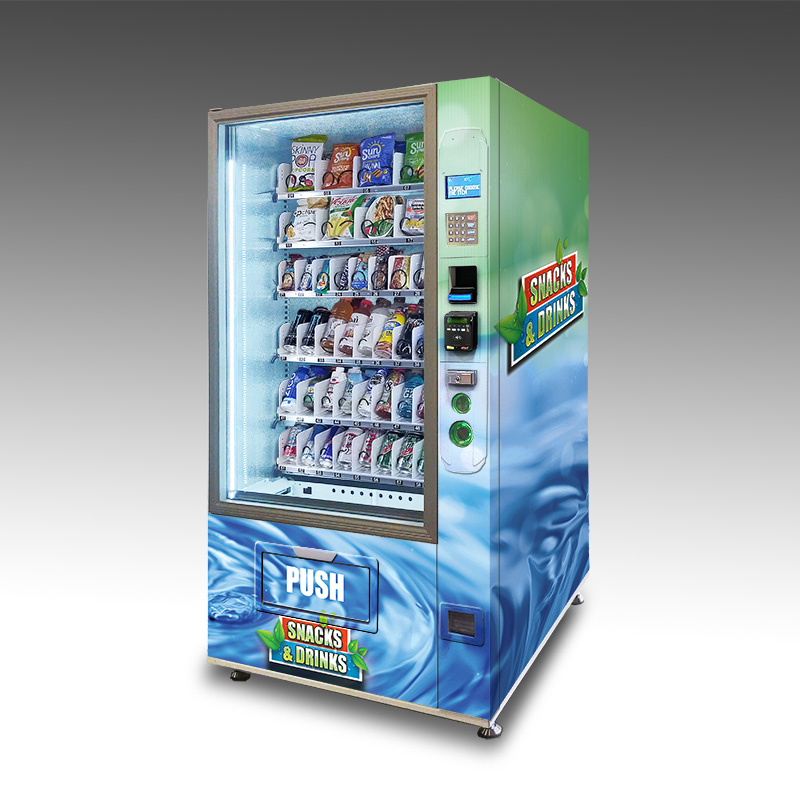
China Top Vending Machine Manufacturers for Global Buyers
Entering the vending machine business requires more than purchasing attractive equipment. It demands careful research, realistic budgeting, and dependable after-sales support. China has become a major manufacturing center for vending machines, offering touchscreen models, refrigerated units, smart lockers, and customized payment systems. However, quality can vary widely between suppliers. A polished showroom does not always guarantee reliable field performance.
Vending industry consultant David M. Reilly offers a practical reminder: “A machine earns trust before it earns revenue.” The point is simple. Buyers should examine payment security, temperature control, product capacity, energy consumption, and remote monitoring functions. A machine placed in a busy railway station faces different demands from one serving a quiet office lobby. Small details matter. Door hinges, screen brightness, compressor noise, and spare-part availability can influence daily performance.
Experienced global buyers also inspect factory processes, certification documents, testing records, and warranty terms. They ask whether manufacturers can support different voltages, languages, currencies, and climate conditions. Shipping costs and installation training deserve equal attention. A low purchase price may become expensive after repeated repairs or delayed parts. That lesson is easy to overlook.
This guide introduces leading Chinese vending machine manufacturers for international buyers. It compares product capabilities, customization options, production experience, and service reliability. The evaluation is not perfect. Supplier claims still require verification. Buyers should request samples, confirm compliance requirements, and test machines in realistic locations before placing large orders. Careful preparation creates a stronger foundation for a sustainable vending machine business.
China’s vending machine manufacturing sector serves supermarkets, offices, transport hubs, schools, and hospitality sites worldwide. Many factories combine sheet-metal fabrication, refrigeration assembly, software integration, and final testing under one production system. This structure can shorten lead times and simplify communication for overseas buyers.
Manufacturers commonly offer refrigerated, ambient, frozen, touchscreen, and mixed-temperature models. Buyers can request custom cabinet sizes, payment interfaces, language settings, branding areas, and remote inventory monitoring. Strong suppliers document temperature stability, electrical safety, payment security, and software performance before shipment. Factory audits still matter. Photos are not enough.
Tips: Ask for sample test records, component specifications, warranty terms, spare-part plans, and installation guidance. Confirm certification requirements for the destination market before production. A clear contract should define inspection standards and response times.
China’s key strengths include broad component availability, flexible customization, mature export logistics, and competitive production capacity. However, quality varies between factories, even when product samples look similar. A low quotation may reflect weaker insulation, limited testing, or rushed software development. That risk deserves careful review. Pilot orders are often wiser than immediate large purchases. Buyers should also evaluate maintenance access, network stability, cleaning procedures, and local technical support. A machine that looks impressive in a showroom may perform differently after months of daily use.
Selected national indicators supporting smart, connected and location-based vending deployments, 2023
China’s large urban population, high internet adoption and widespread online shopping provide a strong operating environment for cashless, connected vending equipment and unattended retail solutions. These indicators describe market enablers rather than sales data for any individual manufacturer or brand.
Sources: National Bureau of Statistics of China, 2023; China Internet Network Information Center (CNNIC), The 53rd Statistical Report on Internet Development in China, 2024.
Chinese vending machine manufacturers now supply many machine types for global retail projects. For buyers, the key decision is function, not appearance. Snack and beverage machines remain popular in offices, schools, stations, and residential buildings. They use spirals, elevators, or conveyor systems to reduce product damage. Chilled models can store sandwiches, salads, milk, and bottled drinks. Temperature records matter. Combo machines combine snacks and beverages, saving valuable floor space.
Fresh-food machines use wider compartments and stronger cooling systems. They suit campuses, hospitals, offices, and transport hubs. Coffee vending machines can grind beans, heat water, and serve drinks within minutes. Some models include milk refrigeration and automatic cup dispensing. Frozen-food machines need reliable insulation and stable temperature control. They may sell ice cream, frozen meals, or packaged ingredients. Smart cabinets and parcel-style units can also support controlled product collection.
Chinese suppliers often customize screen size, payment methods, cabinet layout, and software language. Outdoor machines need weather protection, strong locks, and suitable IP ratings. Payment systems must match local banking rules and customer habits. Buyers should request test reports, warranty terms, spare-part lists, and remote support details. A low price can hide weak cooling, difficult cleaning, or slow maintenance. More features are not always better. A practical site test may reveal confusing menus or poor product visibility. The machine must work for real users, not only look advanced in a showroom.
China Top Vending Machine Manufacturers for Global Buyers
Choosing a China-based vending machine supplier requires more than comparing unit prices. Inspect the factory’s production area, testing process, and quality records. Ask who manufactures the refrigeration system, payment module, and cabinet. Clear answers show practical control. Vague answers create risk.
Request a working sample before placing a large order. Test temperature stability, product delivery, touchscreen response, and remote monitoring. Open the machine repeatedly. Check whether shelves bend, motors jam, or doors close unevenly. Ask for electrical safety reports and export documents for your target market. A test video helps, but hands-on inspection is stronger evidence. Factory capacity also matters. A supplier may build one excellent machine, then struggle with 200 units.
Review customer references from similar climates and operating conditions. Confirm warranty terms, spare-parts availability, software support, and response times. Ask for a written replacement process, not only a sales promise. A small pilot order can reveal packaging damage, customs delays, and installation problems. These details are easy to underestimate. I would also examine communication during a minor complaint. A supplier that avoids simple questions may become slower after payment. Some factories will not communicate perfectly. That weakness deserves attention, not excuses. Reliable cooperation often depends on documented inspections, realistic delivery schedules, and people who remain reachable after installation.
China Top Vending Machine Manufacturers for Global Buyers
Reliable vending machine production starts with measurable processes, not attractive showroom samples. Experienced manufacturers should show production records, material certificates, and inspection procedures before receiving a large order. Buyers can review sheet metal thickness, powder coating adhesion, door alignment, and payment-system stability. Small details matter.
Customization usually covers cabinet dimensions, screen layout, product spirals, cooling temperature, lighting, and remote monitoring. A capable engineering team converts these requests into drawings, prototypes, and test samples. Each revision should record the reason for change. This prevents repeated mistakes during mass production. However, customization can increase lead times, replacement costs, and maintenance difficulty. Buyers should question unnecessary features before approving the final design.
Quality control should continue from incoming materials to shipment. Inspectors can check welded joints, electrical insulation, temperature recovery, vibration resistance, and software performance. A practical factory may use sample testing, full visual inspection, and pre-shipment testing under simulated operating conditions. Clear acceptance standards are essential. They should cover voltage requirements, packaging strength, fault alarms, spare parts, and user safety. Independent inspections can add confidence, especially when buyers cannot visit the facility. Factory reports are useful, but they are not perfect evidence. On-site verification and documented corrective actions still matter. Suppliers should also provide manuals, wiring diagrams, warranty terms, and service response procedures in the buyer’s working language.
Industry reference table for evaluating production capability, customization scope, and quality-control practices without identifying individual companies or brands.
| Evaluation Category | Data Dimension | Typical Industry Range or Requirement | Quality-Control Standard or Practice | Recommended Buyer Verification |
|---|---|---|---|---|
| Production | Machine Types | Snack, beverage, fresh-food, combination, refrigerated, outdoor, and smart vending configurations. | Product architecture should match the intended temperature range, product size, dispensing method, and installation environment. | Request a product matrix showing supported product categories, temperature zones, dimensions, and dispensing mechanisms. |
| Production | Typical Manufacturing Workflow | Engineering review, sheet-metal fabrication, surface treatment, electrical assembly, software integration, testing, and final packing. | Documented work instructions, controlled drawings, incoming inspection, in-process inspection, and final inspection records. | Ask for a process flow chart, inspection plan, and sample quality records with sensitive commercial information removed. |
| Production | Cabinet Material | Commonly powder-coated carbon steel or stainless steel; material thickness varies by structure, security level, and outdoor requirements. | Material certificates, thickness checks, weld inspection, dimensional inspection, and coating adhesion checks. | Confirm material grade, sheet thickness, corrosion protection, and whether the stated specification applies to the complete cabinet. |
| Production | Cooling Performance | Refrigerated models commonly operate within a controlled chilled range selected for beverages or food; exact performance depends on ambient conditions and load. | Temperature mapping, recovery testing after door or delivery cycles, alarm verification, and sensor calibration. | Request a temperature test report stating ambient temperature, product load, set point, stabilization time, and measurement locations. |
| Production | Electrical Compatibility | Export configurations are commonly adapted to local voltage, frequency, plug type, grounding system, and applicable electrical regulations. | Electrical safety testing should include insulation resistance, dielectric strength, protective-earth continuity, leakage current, and functional testing. | Confirm the rated input, plug standard, power consumption, fuse protection, wiring diagrams, and destination-country compliance requirements. |
| Production | Batch Traceability | Each unit should have a unique serial number linked to key components, production date, inspection status, and software version. | Barcode or QR-code records, assembly checklists, component lot records, and final release authorization. | Verify that the serial number appears on the machine, packing list, inspection report, and warranty documentation. |
| Customization | Cabinet and Layout Customization | Possible changes include machine dimensions, number of selections, tray layout, product spirals, locker compartments, delivery openings, and access doors. | Approved engineering drawings, tolerance review, prototype validation, and first-article approval before mass production. | Approve a dimensioned drawing and confirm the largest and smallest product sizes that can be dispensed reliably. |
| Customization | Branding and Exterior Finish | Common options include powder coating, vinyl graphics, screen printing, illuminated panels, custom colors, and logo placement. | Color reference approval, print proof approval, coating thickness checks, adhesion testing, and appearance inspection under defined lighting. | Approve a physical color sample or controlled proof and specify acceptable limits for color, surface defects, and graphic alignment. |
| Customization | Payment System Integration | Configurations may support cash, card, contactless, QR-code, mobile-wallet, or closed-loop payment systems, subject to local availability. | Interface compatibility testing, payment-failure handling, refund logic, transaction logging, and cybersecurity review for connected systems. | Confirm supported payment interfaces, certification responsibility, settlement process, offline behavior, refund rules, and local acquirer compatibility. |
| Customization | Telemetry and Remote Management | Typical functions include inventory monitoring, temperature alerts, sales reporting, fault notifications, remote configuration, and audit logs. | Role-based access, encrypted communication, software version control, backup procedures, event logging, and recovery testing. | Request an API or data-field specification, hosting location, service-level terms, data-retention policy, and connectivity requirements. |
| Customization | Language and User Interface | Screen text, audio prompts, error messages, product labels, payment instructions, and manuals can commonly be localized. | Translation review, character-display testing, accessibility checks, and end-to-end transaction testing in each supported language. | Review the final interface strings and test language switching, decimal formats, currency display, and error messages on the target hardware. |
| Customization | Outdoor and Environmental Options | Options may include weather-resistant coating, rain protection, anti-condensation measures, stronger locks, sun shielding, and thermal management. | Ingress protection assessment, corrosion testing where applicable, door-seal inspection, drainage checks, and environmental function testing. | Confirm the intended installation location, ambient temperature, humidity, precipitation exposure, sunlight, and required enclosure rating. |
| Quality Control | Quality Management System | A mature factory commonly operates documented procedures covering purchasing, production, inspection, nonconformity control, and corrective action. | ISO 9001 certification may be used as a reference, but the certificate scope, validity, and issuing body should be checked independently. | Request the current certificate, scope, expiry date, audit status, and evidence that the vending-machine production site is covered. |
| Quality Control | Incoming Material Inspection | Inspection commonly covers sheet metal, compressors, motors, control boards, displays, payment modules, wiring, sensors, and packaging materials. | Supplier approval, sampling plans, component specifications, lot identification, and quarantine procedures for nonconforming materials. | Ask for the incoming inspection checklist and the procedure used when supplied components fail inspection. |
| Quality Control | Functional Testing | Every finished unit should be tested for power-up, refrigeration or heating, product delivery, lighting, display, payment communication, alarms, and door operation. | Final inspection checklist with recorded results, tester identification, test date, software version, and pass/fail disposition. | Require a completed factory acceptance test or pre-shipment inspection report for each serial-numbered unit or agreed sampling level. |
| Quality Control | Safety and EMC Compliance | Applicable requirements depend on the destination market and may include electrical safety, electromagnetic compatibility, radio, energy, and material regulations. | Relevant test reports should identify the exact model, rated input, test configuration, applicable standard edition, and laboratory information. | Do not rely only on a generic declaration; verify model numbers, technical construction files, report validity, and destination-market obligations. |
| Quality Control | Dispensing Accuracy | Products should be delivered without crushing, jamming, double dispensing, or payment-to-delivery mismatch under the approved product range. | Repeated-cycle testing using representative product dimensions, weights, packaging types, and column configurations. | Define an acceptance test with a minimum number of cycles and specify allowable jam, failed-delivery, and refund rates. |
| Quality Control | Reliability Testing | Testing may include repeated dispensing cycles, door cycles, payment cycles, power interruption recovery, and thermal operation. | Test conditions, cycle counts, failure definitions, corrective actions, and retest results should be documented. | Request reliability-test methodology rather than accepting an unsupported lifetime claim or a general statement of durability. |
| Quality Control | Packaging and Export Protection | Export packaging commonly uses protective film, cushioning, corner protection, moisture control, reinforced cartons, or wooden cases depending on transport risk. | Packaging validation, drop or vibration assessment where appropriate, moisture protection, and container-loading inspection. | Confirm package dimensions, gross weight, lifting points, stacking limits, fumigation requirements, and loading photographs. |
| Commercial Readiness | Documentation Package | A complete delivery package normally includes user manuals, installation instructions, wiring diagrams, spare-parts lists, maintenance schedules, and software information. | Document revision control, model-number consistency, multilingual review, and controlled release with the shipment. | Request a sample documentation index before order confirmation and verify that all documents match the purchased configuration. |
| Commercial Readiness | Warranty and After-Sales Support | Support terms should define warranty duration, covered parts, exclusions, response time, remote diagnostics, replacement procedures, and labor responsibility. | Formal claim-registration process, spare-parts identification, root-cause analysis, and corrective-action tracking. | Obtain written warranty terms and identify the support channel, spare-parts lead time, escalation path, and responsibility for local service. |

Note: Ranges and practices are indicative industry references rather than commitments from any specific manufacturer. Final specifications should be confirmed through drawings, test reports, compliance documents, and a signed purchase agreement.
Choosing a vending machine manufacturer for export requires more than comparing prices. Global buyers should examine factory experience, production records, and after-sales support. Ask for clear specifications, test reports, and recent export references. A reliable supplier explains voltage options, payment terms, shipping conditions, and warranty limits without avoiding difficult questions.
Export compliance must match the destination market. Machines may need electrical safety testing, energy labels, language settings, and approved plug types. Customs documents should include accurate product descriptions, packing lists, invoices, and certificates of origin when required. Confirm the tariff code with a qualified customs adviser. Small errors can delay a container. They happen.
Tips: Request a sample unit or factory video inspection. Check touchscreen language, payment interfaces, cooling performance, and product capacity. Ask how quickly spare parts can arrive. Also confirm whether remote diagnostics work in your region. Do not assume one certificate covers every country.
A strong export service continues after delivery. It should include installation guidance, user manuals, troubleshooting procedures, and trained technical contacts. Buyers should clarify who handles damage claims during transport. Service response times deserve written confirmation. In practice, some suppliers promise more than they can deliver. A careful buyer should test communication before placing a large order. One unanswered technical question may reveal a weak support system.