Top RFID Mobile Terminals for Efficient Inventory Management?
In today's fast-paced retail environment, efficient inventory management is crucial. One significant tool that enhances this process is RFID Mobile Terminals. These devices utilize radio frequency identification technology to streamline inventory tracking. They can improve accuracy, reduce labor costs, and enhance supply chain visibility.
RFID mobile terminals offer real-time data access. Employees can easily scan items and record information on the spot. This capability minimizes human error and speeds up the workflow. However, the effectiveness of these devices can vary based on their implementation and user training. Some organizations face challenges in integrating RFID technology into their existing systems.
Moreover, businesses must choose the right RFID mobile terminals for their needs. Different models offer varying features like durability, battery life, and connectivity options. Finding the right balance can be complex. The choice impacts user experience and overall efficiency. Evaluating these aspects is essential for anyone looking to invest in RFID mobile terminals.
Overview of RFID Technology in Inventory Management
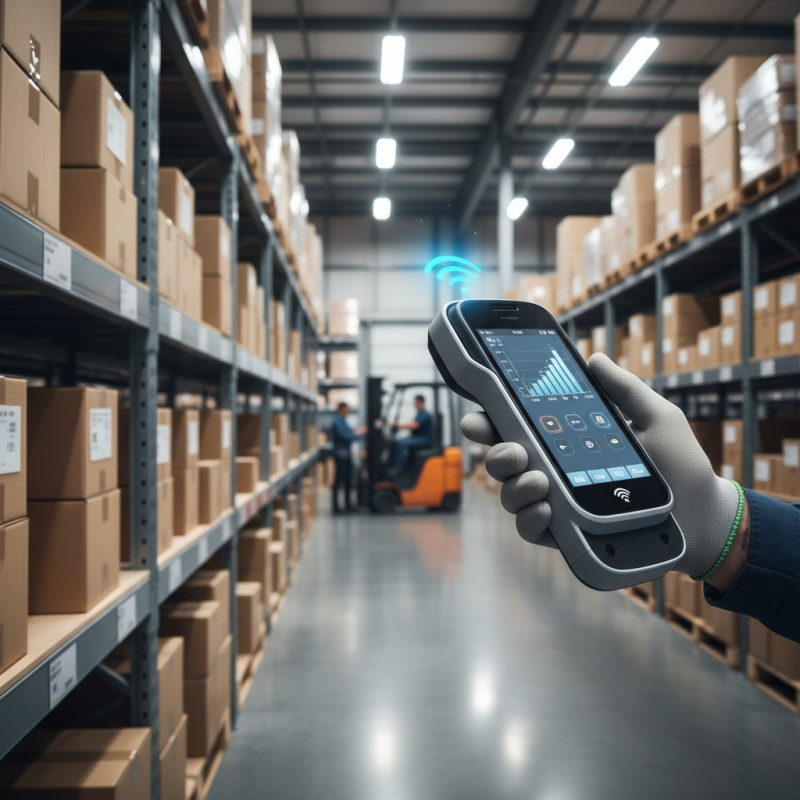
Radio Frequency Identification (RFID) technology is transforming inventory management across various industries. It enables businesses to track items in real time. By attaching RFID tags to products, companies can quickly locate inventory without manual scanning. This leads to significant time savings and enhanced accuracy in stock management.
The adoption of RFID goes beyond mere convenience. It introduces challenges that require careful consideration. Some businesses struggle with the initial setup cost and training employees on new systems. There can also be technical malfunctions, leading to data inaccuracies that disrupt operations. Additionally, not all products are suitable for RFID tagging, which can limit its effectiveness.
Despite these hurdles, the benefits are apparent. Increased visibility into inventory levels improves decision-making. Additionally, RFID can help prevent stockouts and overstock situations. As technology evolves, businesses must remain agile to adapt and maximize the potential of RFID in inventory management.
Each implementation comes with its unique set of challenges, demanding a critical approach from business leaders.
Key Features to Look for in RFID Mobile Terminals
When choosing RFID mobile terminals for inventory management, several key features are crucial. Battery life is one important factor. Devices with long-lasting batteries, often exceeding 12 hours, help reduce downtime. A report by IDTechEx notes that battery efficiency can be a significant decision point for businesses. A device failing to perform consistently leads to inefficiencies.
Another critical aspect is scanning speed. Fast scanning ensures that items are processed quickly, enhancing overall workflow. According to studies, terminals that scan items in less than 200 milliseconds can drastically improve inventory count accuracy. Companies often report an increase in productivity of up to 30% with faster devices.
Moreover, ruggedness is essential for environments prone to drops or impacts. Traditional handhelds often fail in tough conditions. A survey highlights that roughly 20% of devices face damage within a year due to environmental factors. Waterproof and shock-resistant features can help mitigate this risk. Many teams overlook this, leading to extra costs. Investing in durable equipment can often save money in the long run.
Top Brands Offering RFID Mobile Terminals for Inventory
In today’s fast-paced world, efficient inventory management is crucial. RFID mobile terminals play a significant role in this process. Companies are consistently looking for top brands that offer reliable and effective solutions. These devices streamline the tracking and management of inventory. They can reduce human errors and save time during stocktaking.
Choosing the right RFID mobile terminal requires careful consideration of features and usability. Look for devices with durable designs and long battery life. This ensures they can withstand daily use in tough environments. Additionally, user-friendly interfaces will make staff training easier. Choose terminals that support various RFID tags for flexibility.
Tip: When selecting a device, consider testing it in your environment first. This way, you can see how it performs under real conditions.
Some devices may lack certain features, making it necessary to assess your specific needs. Are you handling large volumes of goods? If so, speed and accuracy should be priorities. Keep in mind that not all devices are compatible with existing systems. This could lead to unexpected costs and delays.
Tip: Regularly revisit your inventory processes. This will help identify any gaps or inefficiencies. Making incremental changes can lead to significant improvements over time.
Comparative Analysis of Performance and Usability
Inventory management is essential for businesses. RFID mobile terminals play a significant role in streamlining this process. When comparing different models, we must look at performance and usability closely. Some devices may have impressive scanning speeds but lack an intuitive interface. Users often struggle to navigate complex menus, which can lead to frustration.
Other terminals offer user-friendly designs, making them easier to operate. However, their performance might be slower in scanning multiple tags. Finding the right balance can be challenging. A device that works well for one company might not suit another’s needs. It’s crucial to assess user feedback and test devices in real-world scenarios.
Battery life is another vital factor. Some terminals die quickly during busy operations. This can disrupt workflows and productivity. Businesses need to invest time in evaluation. Testing various terminals in your specific environment will help identify the best option. Keep usability and performance in mind to ensure efficient inventory management.
Future Trends in RFID Technology for Inventory Solutions
As RFID technology evolves, its impact on inventory management becomes clearer. Imagine a warehouse operating with seamless efficiency. RFID mobile terminals enable real-time tracking of products. Employees can scan items swiftly, reducing human error and speeding up the process. This convenience allows staff to focus on more complex tasks, improving overall productivity.
Future trends indicate a more integrated approach. The use of artificial intelligence and machine learning will enhance data analysis from RFID systems. Efficient data insights lead to better decision-making and inventory forecasting. However, challenges persist. The implementation cost can be high, and staff training is essential for success. Without proper education, the full potential of RFID won't be realized.
Additionally, privacy concerns loom over the advancement of RFID technology. As data collection increases, organizations must navigate these complexities. Balancing efficiency with ethics is vital for building trust with customers. The path ahead poses questions that need resolution, but the benefits remain promising.