What is a Wireless Power Bank and How Does It Work?

In the age of mobility, a Wireless Power Bank offers convenience for our tech-driven lives. John Marshall, a leading expert in energy technology, states, "Wireless power banks have redefined our relationship with charging." This innovation eliminates tangled cords and provides seamless power solutions for devices on the go.

Wireless power banks harness the principles of electromagnetic induction. They allow users to charge their smartphones and gadgets without the hassle of cables. Imagine resting your phone on a sleek device and watching it power up instantly. This technology is not just about easy charging; it reflects a shift toward greater efficiency and user experience.

However, the journey of wireless charging has its challenges. Many users grapple with compatibility issues and charging speeds. While some models work flawlessly, others leave users frustrated. This inconsistency prompts us to reflect on what truly defines an effective wireless power bank. As the industry evolves, the quest remains clear: simplify our lives without compromising performance.
What is a Wireless Power Bank and How Does It Work?

What is a Wireless Power Bank?

A wireless power bank is a portable device that charges electronics without using cables. It uses electromagnetic fields to transfer energy efficiently. This technology has gained popularity due to the rise of devices compatible with wireless charging. According to market analysis reports, the wireless power bank segment is expected to grow significantly. By 2025, its market value could reach over $30 billion.

Wireless power banks work by creating a magnetic field through an induction coil. When a compatible device is placed on the power bank, the field generates a current. This current charges the device’s battery. However, not all devices support wireless charging. It's essential to ensure compatibility for effective charging.

**Tips:** When selecting a wireless power bank, consider its capacity and charging speed. Look for models with at least 10,000mAh to keep your devices charged on the go. Additionally, keep the contact area clean to maintain efficient charging. If you find charging slower than expected, check for any obstructions between the devices. Remember, while convenient, wireless charging may not always be as quick as wired options.


The Technology Behind Wireless Charging

Wireless charging technology is revolutionizing how we power our devices. At its core, this technology uses electromagnetic fields to transfer energy. A wireless power bank generates a magnetic field. When a compatible device is placed on top, it absorbs this energy. The process seems seamless, but not without its flaws.

The key component in this technology is electromagnetic induction. An induction coil in the charger creates a magnetic field. Another coil in the device converts this field back into electrical energy. While this sounds efficient, energy loss during transmission is common. Heat can develop, leading to reduced charging speeds. Sometimes, devices may misalign, causing interruptions in charging.

Various challenges exist in making wireless charging universally efficient. Compatibility between devices remains an issue. Not every gadget supports this technology. Additionally, the speed of wireless charging can lag behind traditional methods. Users often face these frustrating truths. Wireless charging is promising, yet it requires ongoing improvements to reach its full potential.

How Wireless Power Banks Function: A Step-by-Step Guide

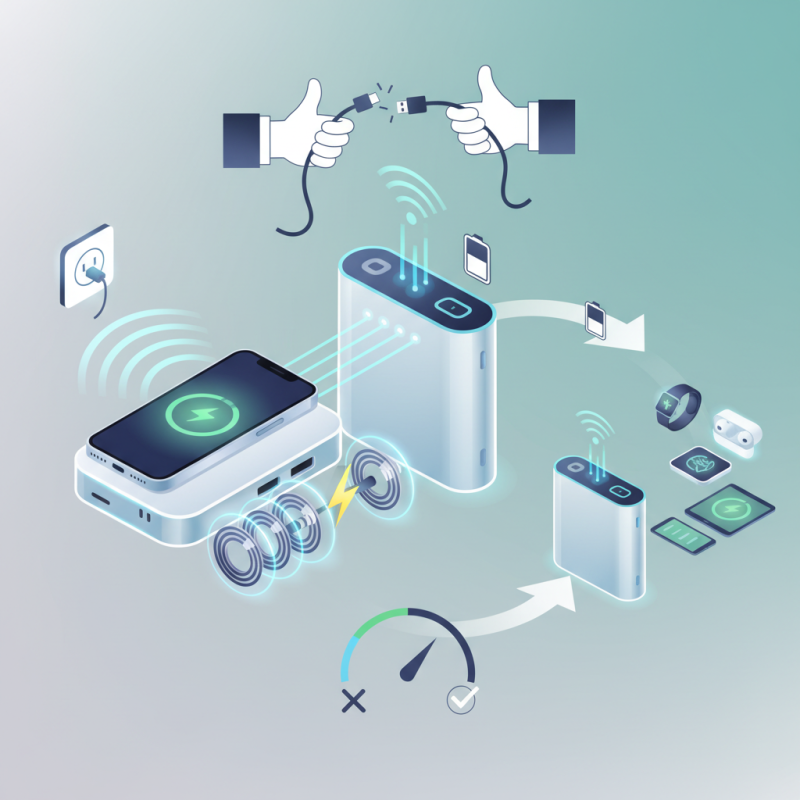
Wireless power banks are innovative devices that allow users to charge their gadgets without cables. They use an integrated charging pad that communicates with compatible devices. The process begins with the power bank receiving energy from a wall outlet. This energy is stored in a built-in battery.

When a user places their device on the charging pad, the power bank generates an electromagnetic field. This field transfers energy to the device through induction. This invisible exchange feels almost magical but requires careful alignment. If the phone is not centered, charging may be slow or ineffective.

These devices are convenient but have limitations. They may not offer the same speed as traditional wired chargers. Some users report frustration when finding the right position for charging. Not all devices are compatible. Hence, checking compatibility before purchase is crucial. While wireless power banks simplify life, they encourage a different way of thinking about convenience and technology.

Wireless Power Bank Capacity Comparison

This chart illustrates the user preference distribution for various wireless power bank capacities. As capacity increases, the number of users who prefer each type gradually rises, demonstrating the trend towards higher capacity solutions in the market.

Benefits of Using a Wireless Power Bank

Wireless power banks are becoming increasingly popular for their convenience. They allow users to charge devices without using cables. According to a recent report by MarketsandMarkets, the wireless charging market is expected to grow to $30 billion by 2025. This statistic shows how consumers value the flexibility of wireless solutions.

One significant benefit of wireless power banks is portability. They let users charge phones or earbuds on the go. A study indicated that 70% of smartphone users find portable chargers essential for daily use. However, their efficiency can sometimes be lower than wired chargers, which may be a drawback during emergencies. Users often find themselves with varying charging speeds based on their devices.

Another appealing aspect is the reduced wear on charging ports. Regular use of charging cables can damage ports over time, leading to costly repairs. Wireless power banks can help prolong the life of these components. Still, users should remember that they need to ensure their devices support wireless charging to maximize this benefit. The future of charging is undoubtedly wireless; however, there are challenges to consider.

What is a Wireless Power Bank and How Does It Work? - Benefits of Using a Wireless Power Bank

Feature Description
Definition A wireless power bank is a portable battery pack that can charge devices wirelessly using Qi technology.
Working Mechanism Wireless power banks use electromagnetic induction to transfer energy from the power bank to the device.
Charging Speed Generally slower than wired charging, but many modern wireless power banks support fast wireless charging.
Compatibility Compatible with any Qi-enabled device, including smartphones, smartwatches, and earbuds.
Portability Lightweight and compact, making them easy to carry for on-the-go charging.
Safety Features Includes features like overcharge protection, temperature control, and short circuit prevention.
Benefits Convenient, eliminates the need for cables, and allows for charging multiple devices simultaneously.

Considerations When Choosing a Wireless Power Bank

When choosing a wireless power bank, consider capacity first. The capacity indicates how much charge it can hold. A power bank with 10,000mAh can charge your phone at least two times. However, smaller models are more portable. They fit nicely in pockets. Larger models can be heavier and bulky. They may not be ideal for on-the-go convenience. Think about how you use your devices daily.


Next, examine charging speed. Different power banks offer different output rates. A higher output means faster charging. Look for options that support quick charging features. It's frustrating to wait for your device to charge, especially when you're busy. Ensure compatibility with your devices. Not all power banks support all smartphones or tablets. Check the specifications carefully.


Also, consider safety features. Overheating and overcharging can damage your devices. Many power banks come with built-in safety mechanisms. Choose one with short-circuit protection and surge protection. It’s essential for long-term use and device health. Keep these factors in mind. Reflection is vital here; if you often travel, prioritize portability. If home use is more common, focus on capacity and safety.